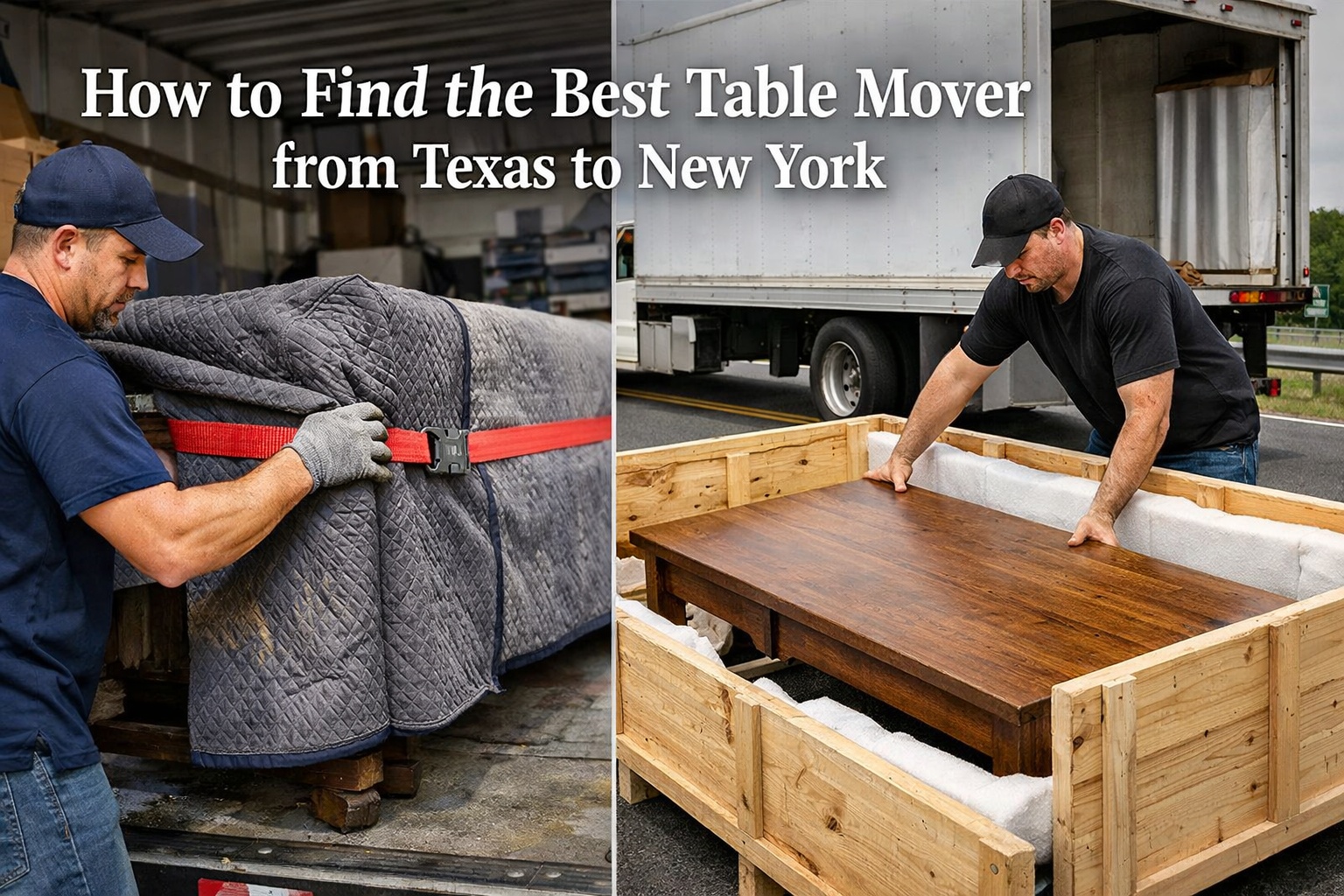
Relocating a large or valuable table from Texas to New York is not a standard move. Tables are heavy, awkward, and often fragile. One mistake can lead to cracks, warped legs, joint separation, or permanent surface damage. The right approach is hiring a qualified table mover who understands long-distance handling, professional packing, custom crating, and interstate transport logistics. This article explains what matters most before you commit.
Quick Answer: table mover from Texas to New York
A mover from Texas to New York specializes in safely transporting heavy or oversized tables across state lines in compliance with federal moving regulations. This includes professional disassembly, protective padding or custom crating, secure loading, condition documentation, insured transport, and climate-aware routing. Hiring the right provider reduces the risk of damage, delivery delays, insurance disputes, and unexpected costs during interstate relocation.
Table Mover Essentials you should know
-
-
Large tables require specialized packing, balance control, and load placement
-
Interstate moves increase damage risk, insurance exposure, and cost variability
-
Pricing depends on size, weight, material, distance, timing, and access conditions
-
Experience with interstate furniture transport matters more than truck size alone
-
Verified licensing and valuation coverage are critical for high-value tables
-
Who This Type of Service Is Best For
This guide is especially relevant if you are moving:
-
-
Solid wood dining or conference tables
-
Marble, granite, or stone tables
-
Custom-built or oversized tables
-
Antique or heirloom furniture
-
High-value designer or imported tables
-
These items typically exceed standard mover handling thresholds and require specialized care.
Why This Move Requires More Than Basic Planning
Moving a table across state lines is not like moving boxes or chairs. Tables often exceed standard weight limits and have uneven balance points. Solid wood, stone, or custom-built tables are especially vulnerable during long hauls. Temperature shifts, road vibration, humidity changes, and improper strapping can cause joint stress, cracking, or finish damage.
A professional table mover plans for these risks in advance. This includes disassembly strategy, padding thickness, crate design (if required), truck placement, shock exposure, and unloading conditions. Without this planning, even a minor oversight can result in costly repairs or total loss.
This type of move also involves scheduling coordination. Elevators, stair access, COI (Certificate of Insurance) requirements, narrow hallways, parking permits, and delivery windows—especially in New York—must be confirmed in advance. Experience turns a high-risk move into a controlled, documented process.
Why Trust This Guide?
This guidance is based on established interstate furniture handling standards and real-world relocation constraints. Professional interstate movers operate under FMCSA regulations, follow weight distribution protocols, issue Bills of Lading, and document item condition before and after transport.
Long-distance furniture transport introduces variables such as multi-day vibration exposure, humidity fluctuation, and handling transfers. Understanding how these factors affect tables comes from hands-on relocation experience—not theory.
Industry best practices evolve as damage data, insurance claims, and transport standards change. This guide reflects current expectations for safe, compliant, and efficient interstate furniture moves.
What a table mover Typically Costs and why
The cost of hiring a mover varies widely because tables are not standardized freight. Pricing reflects both physical risk and logistical complexity.
Key pricing factors include:
-
-
Table dimensions (length, width, height)
-
Total weight and balance characteristics
-
Material type (solid wood, glass, marble, metal)
-
Disassembly, reassembly, or custom crating needs
-
Distance and delivery timeline
-
Access conditions at both pickup and delivery
-
Insurance or valuation coverage level
-
Below is a general planning range:
|
Table Type |
Estimated Cost Range |
|
Small dining table |
$800 – $1,400 |
|
Large solid wood table |
$1,500 – $2,800 |
|
Marble or stone table |
$2,500 – $4,500 |
|
Custom or antique table |
$3,000+ |
These ranges assume professional packing, standard delivery windows, and insured interstate transport. Expedited service, guaranteed delivery dates, custom crating, or difficult access conditions can increase total cost.
Key Terms Explained in Plain Language
Table mover
A specialist who transports large or heavy tables using professional packing, secure load methods, and interstate-compliant procedures.
Interstate move
Any relocation that crosses state lines and requires federal registration, insurance compliance, and documented transport processes.
Custom crating
A protective wooden enclosure built to immobilize fragile or oversized furniture during transport and reduce vibration exposure.
White-glove handling
A premium service level including detailed packing, condition documentation, careful loading, precise placement, and reassembly.
Access conditions
Physical constraints such as stairs, elevators, door widths, loading docks, parking limits, or long carry distances.
Valuation coverage
Declared protection for your item’s value during transit. This differs from basic released value coverage and affects claim limits.
How Geography Shapes a Texas to New York Table Move
A move from Texas to New York spans more than 1,500 miles and crosses multiple climate zones. City-to-city details matter.
Texas pickup locations, such as Houston or Dallas, often allow easier truck access and loading space. Austin and San Antonio may involve tighter residential streets or HOA restrictions.
On the New York side, delivery complexity varies sharply. Suburban areas like Westchester or Long Island generally offer better access than dense urban zones such as Manhattan, Brooklyn, or Queens, where elevators, COIs, loading docks, and strict delivery windows are standard.
Route planning also affects table safety. Major corridors such as I-40, I-81, and I-95 influence transit time, fuel costs, vibration exposure, and weather conditions. Climate transitions from heat and humidity to colder, drier air can stress wood joints and finishes. Experienced providers plan protection and timing accordingly.
What’s Included—and What’s Optional
Not all table-moving services are equal.
Standard services usually include:
-
-
Basic disassembly when required
-
Protective padding and wrap
-
Secured loading and interstate transport
-
Inventory documentation and Bill of Lading
-
Standard insurance or released-value coverage
-
Scheduled delivery window
-
Optional services may include:
-
-
Custom crating for stone or antique tables
-
Climate-controlled or dedicated transport
-
White-glove placement and reassembly
-
Expedited or guaranteed delivery dates
-
High-value valuation coverage upgrades
-
Certificate of Insurance for NYC buildings
-
Optional services increase cost but significantly reduce risk. For heirloom or high-end tables, they are often justified.
How to Verify a Legitimate Interstate table mover
Before booking, confirm that the provider:
-
Supplies a USDOT and MC number
-
Is listed as active on the FMCSA mover registry
-
Carries interstate authority and cargo insurance
-
Explains valuation coverage options clearly
-
Provides a written estimate—not a verbal quote
Any reluctance to provide this information is a red flag.
When Timing Makes the Biggest Difference
Late spring through early fall is peak moving season. Demand increases, schedules tighten, and pricing rises. Summer heat in Texas also raises handling risk for wood tables and adhesives.
Fall often offers better availability and milder conditions. Winter may lower costs, but snow or ice in the Northeast can cause delivery delays.
Weekday moves typically cost less than weekends. Booking four to six weeks in advance improves provider availability and scheduling control.
Real Advantages and Real Trade-Offs
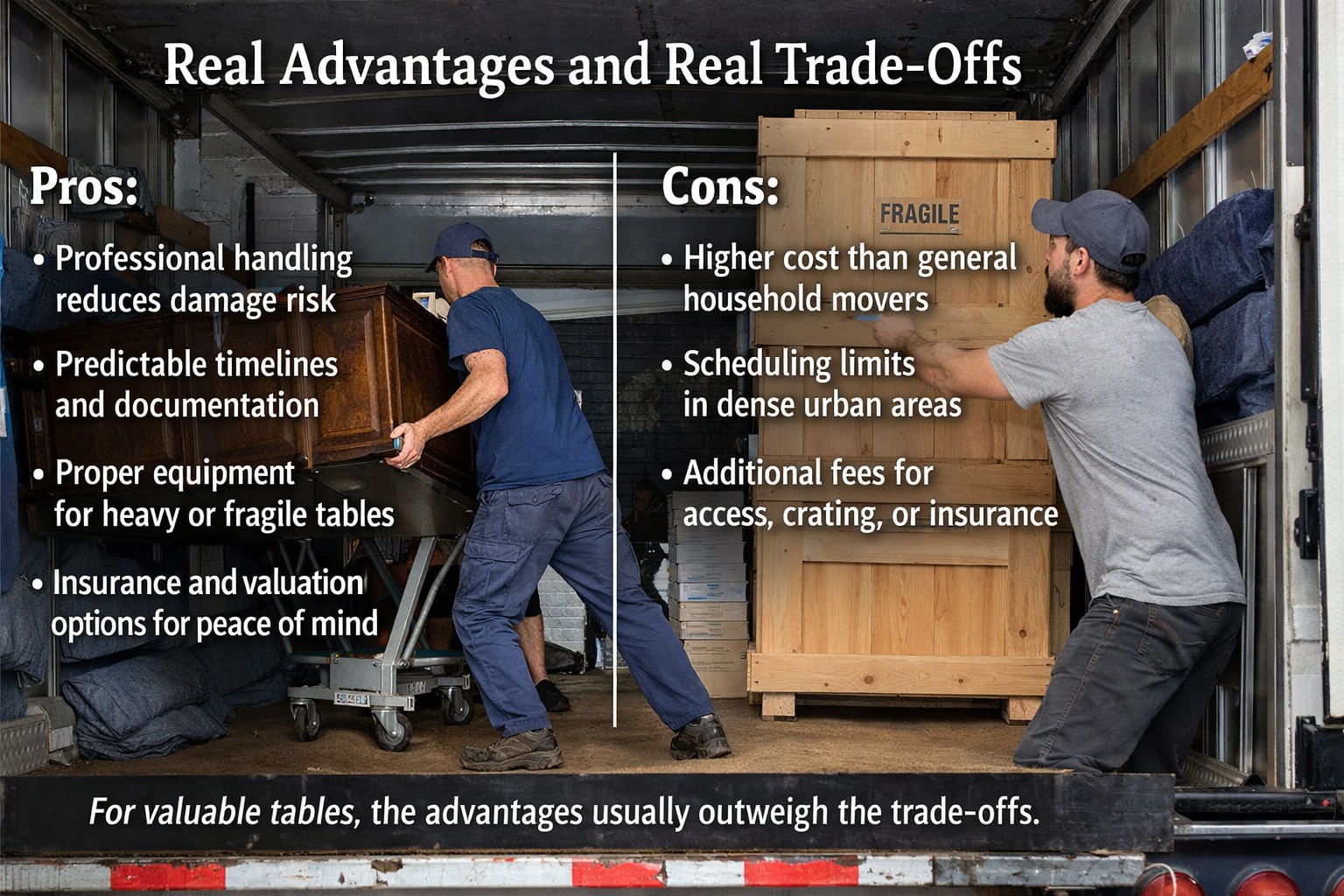
Pros:
-
-
Professional handling reduces damage risk
-
Predictable timelines and documentation
-
Proper equipment for heavy or fragile tables
-
Insurance and valuation options for peace of mind
-
Cons:
-
-
Higher cost than general household movers
-
Scheduling limits in dense urban areas
-
Additional fees for access, crating, or insurance
-
For valuable tables, the advantages usually outweigh the trade-offs.
A Practical Checklist for Choosing the Right Provider
-
Measure table dimensions and estimate weight
-
Confirm pickup and delivery access details
-
Ask about disassembly, crating, and padding methods
-
Review valuation coverage and claim procedures
-
Compare written estimates line by line
-
Verify FMCSA registration and interstate experience
A qualified provider should explain each step clearly without pressure.
Common Moving Mistakes to Avoid
-
-
Assuming all movers handle tables the same way
-
Skipping measurements or weight estimates
-
Ignoring NYC building COI or access rules
-
Choosing the lowest quote without service details
-
Failing to confirm valuation coverage limits
-
Frequently Asked Questions
How long does the move take?
Most Texas-to-New York table moves take 5–10 days, depending on routing and scheduling.
Do tables need to be disassembled?
Large or heavy tables usually require partial or complete disassembly for safety.
Is insurance included?
Basic released-value coverage is standard. Higher-value protection is optional and recommended for valuable tables.
Can I move a marble table safely?
Yes, with proper crating, padding, and professional handling.
Will climate affect my table?
Changes in temperature and humidity can affect wood joints and finishes during long-distance transport.
Are elevators required in New York buildings?
Not required, but elevators significantly reduce cost and handling risk.
Can delivery be scheduled for a specific date?
Guaranteed delivery dates are typically available at a premium.
Making a Confident, Damage-Free Move
Relocating a table across state lines is a specialized task that rewards preparation and expertise. The right table mover brings planning, protection, documentation, and accountability to a complex journey. By understanding geography, services, timing, insurance, and provider selection, you can move with confidence and protect what matters most.
Data Sources & References
Federal Motor Carrier Safety Administration (FMCSA)
American Moving & Storage Association (AMSA)
Interstate furniture handling standards and relocation best practices