
Relocating to Texas is not a small task. Distances are long. Cities vary.—rules, pricing, and service quality change fast. Many people choose the wrong company and pay for it later.
Elite Movers solves this problem by combining experience, planning, and accountability. When done right, your move stays on schedule, on budget, and damage-free. This article explains how to choose the right help and what really affects your move.
Quick Answer: Elite Movers from Texas moving company
Expert movers are licensed, insured professionals who manage packing, transport, and delivery with trained crews and transparent pricing. A reliable Texas moving company provides accurate estimates, protects your belongings, and handles logistics across long distances and local moves with fewer risks.
Elite Movers at a glance
-
-
Professional Movers offers trained crews and verified insurance
-
Costs depend on distance, size, and services
-
Planning reduces delays and hidden fees
-
Texas moves require local and long-distance expertise
-
Why Texas relocations require expert planning
Texas moves look simple until you start. The state is large. Traffic patterns differ by city. Weather shifts fast. Building access rules change by location.
Without planning, people face broken items, delayed deliveries, and unexpected fees. Choosing elite movers helps avoid these issues. They plan routes, manage timing, and prepare for local restrictions before moving day.
A well-planned relocation makes a complex move more manageable. That control protects your time, money, and property.
Why Trust This Guide?
This content is built on objective relocation standards used by professional movers across Texas. It reflects how licensed operators estimate loads, price labor, and manage risk.
The guidance also accounts for practical factors like apartment access rules, long-haul fuel costs, and packing materials that affect real-world outcomes.
Every recommendation aligns with current relocation practices used by professional movers handling both residential and commercial moves.
What elite movers cost and what affects the price
Pricing is one of the biggest concerns when hiring professional movers. Costs are not random. They follow clear variables.
Key pricing factors include:
-
-
Distance between locations
-
Home size or inventory volume
-
Packing and unpacking needs
-
Stairs, elevators, or long carry paths
-
Timing, weekends, or peak season
-
Elite movers provide itemized estimates instead of vague quotes. This transparency helps you compare a Texas moving company fairly.
Typical moving costs in Texas
|
Move Type |
Home Size |
Estimated Cost Range |
|
Local move |
1-bedroom |
$350 – $750 |
|
Local move |
3-bedroom |
$900 – $1,800 |
|
Long distance moving |
Small home |
$2,000 – $4,000 |
|
Long distance moving |
Large home |
$4,500 – $8,000+ |
These ranges assume licensed professional movers using standard equipment and insured transport. Cheap quotes often skip protections or add fees later.
Key moving terms explained simply
elite movers
Licensed professionals with trained crews, insurance, and verified pricing standards.
Texas moving company
A business registered to operate within Texas regulations and transport household goods legally.
professional movers
Workers are trained to pack, load, transport, and unload household items safely.
long distance moving
Relocations that cross significant mileage thresholds, often over 100 miles or across regions.
moving costs
Total expenses include labor, transport, packing materials, and access challenges.
How Texas geography changes your moving plan
Texas is not one market. Each city creates different moving challenges. Dallas and Fort Worth rely on wide highway networks but face heavy weekday traffic. Houston adds humidity, flooding risks, and dense suburbs. Austin has narrow streets, hills, and strict apartment rules. San Antonio mixes urban sprawl with older neighborhoods.
Infrastructure matters. Major routes like I-35, I-10, and I-45 affect timing and fuel use. Long-distance moving within Texas can still mean 300–800 miles on the road. Climate also plays a role. Heat impacts loading speed, crew safety, and item protection. Lifestyle differences influence delivery timing, parking access, and storage needs.
Experienced professional movers plan routes, permits, and schedules based on city-specific realities, not assumptions.
What services are included, and what costs extra
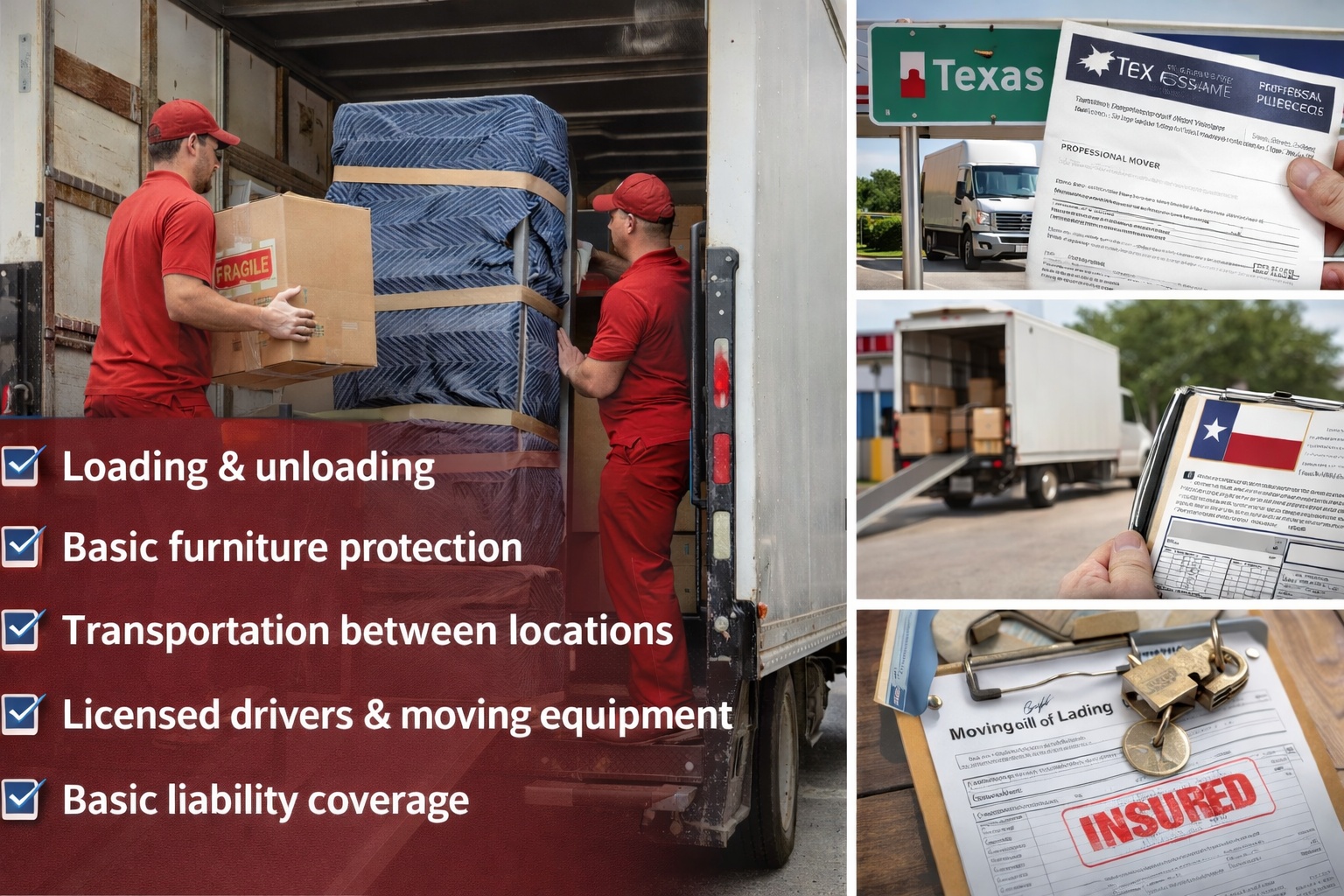
Not all services are equal. Knowing the difference prevents billing confusion.
Standard services usually include:
-
-
Loading and unloading
-
Basic furniture protection
-
Transportation between locations
-
Licensed drivers and moving equipment
-
Basic liability coverage
-
These form the core service of a Texas moving company.
Optional services may include:
-
-
Full packing and unpacking
-
Specialty item handling (pianos, safes)
-
Temporary or long-term storage
-
Appliance disconnect and reconnect
-
High-value item coverage
-
Optional services raise moving costs but reduce risk and effort. Choose them based on time, item value, and physical ability.
Timing your move for cost and comfort
When you move matters almost as much as who you hire.
Peak season runs from May through September. Prices are higher. Availability is tighter. Heat slows work. Move between October and March to get better rates and greater flexibility.
Midweek moves cost less than weekends. Early mornings avoid traffic and heat. End-of-month dates fill fastest due to lease cycles.
Weather matters. Summer heat stresses crews and increases the risk of damage if items are rushed. Winter storms are rare but still affect North Texas routes.
Planning dates early gives elite movers room to optimize pricing and staffing.
Pros and cons of hiring high-end movers
Pros
-
-
Trained crews reduce damage
-
Accurate estimates limit surprises
-
Faster loading and delivery
-
Better handling of complex moves
-
Cons
-
-
Higher upfront cost
-
Limited last-minute availability
-
Strict scheduling policies
-
The trade-off is clear. You pay more for reliability, safety, and predictability.
How to choose the right moving provider
Use a structured approach. Avoid emotional decisions.
Step-by-step checklist:
-
Confirm licensing and insurance
-
Request written, itemized estimates
-
Verify experience with your city or route
-
Ask about crew training and supervision
-
Review liability coverage options
-
Confirm delivery windows in writing
Compare more than price. Compare process, communication, and accountability.
Common Moving Mistakes to Avoid
-
-
Choosing the cheapest quote without details
-
Booking too late during peak season
-
Underestimating inventory size
-
Skipping written agreements
-
Ignoring access restrictions
-
Packing valuables yourself without protection
-
These errors quickly raise costs and stress.
Frequently asked questions
How far in advance should I book?
Four to six weeks is ideal, longer during summer.
Are moving costs negotiable?
Sometimes. Flexibility on dates helps more than haggling.
Do movers disassemble furniture?
Yes, most professional movers include basic disassembly.
Is long-distance moving within Texas common?
Yes. Texas intrastate moves can still be very long.
What items cost extra to move?
Safes, pianos, and oversized items usually add fees.
Should I tip movers?
Tipping is optional but standard for good service.
Do I need extra insurance?
Consider it for high-value or fragile items.
Can movers handle apartments and condos?
Yes, but access rules should be shared in advance.
Moving forward with confidence
A successful move is not luck. It is planning, experience, and clear expectations working together. Texas relocations demand more than a truck and labor. They require route knowledge, timing control, and risk management.
Choosing elite movers means fewer surprises, safer handling, and smoother delivery. When you understand services, timing, and costs, you stay in control of the process.
Start early. Ask detailed questions. Choose professionals who treat relocation as a system, not a task.
Data Sources & References
U.S. Department of Transportation household goods guidelines
Texas Department of Motor Vehicles mover regulations
American Moving & Storage Association best practices